19 August 2022

One Dungeons and Dragons: the 2024 version (edition 5.5)

I guess it was inevitable. A new “version” (the word “edition” seems to be verboten at Wizards of the Coast these days) of Dungeons and Dragons is coming in 2024. It’s currently being called “One D&D,” I suppose to emphasize the compatibility of the 2024 version with the 2014 5th edition rules.


WotC is at pains to stress that everything that has been published for fifth edition will be usable/compatible with the 2024 rules. Of course, this doesn’t prevent it from being a new “edition” in any sense—1st edition AD&D modules can be used easily with 2nd edition and vice versa. But given the ways that the 3rd, 4th, and 5th editions were all incompatible with each other (and with earlier editions)—they were essentially different games altogether—and the divisions that these shifts caused among players, I can understand why WotC would want to do what they can to highlight that no equally dramatic change is coming up in two years.


Anyhow, I think that 5th edition is … fine. I enjoyed using the Adventures in Middle-earth version of the rules for my Mirkwood campaign, and I am enjoying using the core rules for my current Greyhawk campaign. As I’ve mentioned before here, I'm using Gygax's version of the setting (1983 box set) as my base, modifying a few things, and filling in some details here and there. I’m only permitting character options that make sense for the setting (so no tieflings, dragonborn, warlocks, etc.). I don't use the “inspiration” rules or “feats.” Does it feel exactly like 1e AD&D? No, certainly not. But it's not that far off in terms of the actual player experience, I think. We’re having fun with it in any case.


After taking a quick look at the current play test document for One D&D, I already have a couple of concerns. 


I don't like feats at all and (as I just mentioned) I don't use them in my campaign. Making them optional was one of the best things about 5th edition. So I'm disappointed that they now seem to be no longer optional in the play test document. Likewise, I don't like inspiration and don't use it in my game. Not using inspiration keeps the game a bit more “gritty” and dangerous. But inspiration now seems to be required (for humans at least).

My current take is this: I use some modest tweaks to maintain a somewhat “old school” feel to my 5e game. This has been easy to do, and I'm a little concerned that this may be harder to do in 5.5e. But perhaps my worries will prove unfounded. Or perhaps I’ll just stick with “my version” of 5th edition (I certainly will do so for my current campaign). And after I finish the Greyhawk campaign—which very well may not be for a couple of years—I expect I’ll be in the mood to run something different in any case. (Perhaps Against the Darkmaster or Lyonesse...)

18 August 2022

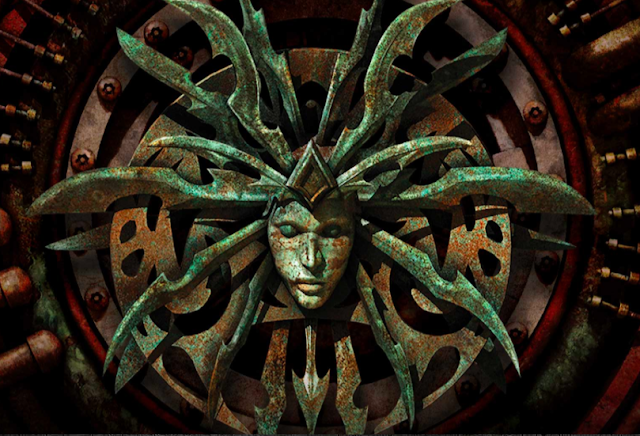
Planescape coming in 2023

Here’s the lineup of 2023 releases for Dungeons and Dragons (5th edition):


-       Keys from the Golden Vault

-       Bigby Presents: Glory of the Giants

-       Phandelver Campaign

-       The Book of Many Things

-       Planescape


The last item is the only one of real interest to me (although I likely will at least look at the other books).  


I didn’t pay much attention to Advanced Dungeons and Dragons during the second edition era (I played briefly in one campaign, which was fine). An exception was the Planescape setting. My interest was prompted by the Planescape: Torment computer role-playing game (which I didn’t play until 2000, after the setting’s print run had finished up). Upon finishing the CRPG, I tracked down the box set. Even though I never did anything with the setting, I was—and remain—a fan of it.


Perhaps I’ll finally run a Planescape campaign once this book becomes available. At the very least, I'm keen to read about it.


09 August 2022

Against the Darkmaster Player’s Handbook now available

As I’ve written here before, I’m a big fan of Against the Darkmaster. It's my favourite FRPG since Mythras. But the core rule-book, while magnificent, is rather huge and unwieldy, and includes a lot of material unnecessary for players.


So I’m delighted that Open Ended Games has published a Player’s Handbook version of the game. Moreover, it should be more widely accessible in print form than the core rules, given that it’s available via print-on-demand at DrivethruRPG.


If you were ever a fan of MERP (Middle-earth Roleplaying), or simply are curious about a fun, low-powered FRPG with lots of entertaining critical hit descriptions, then check out Against the Darkmaster. 


(Running a heavily modified version the old ICE campaign module The Court of Ardor with Against the Darkmaster is a future goal of mine.)

08 August 2022

Crypts And Things had gone Platinum

Kudos to D101 Games on the platinum status of Crypts and Things at DrivethruRPG! 👍


30 July 2022

First Visit to Hommlet (Greyhawk Classics Campaign)

PART 3: ARRIVING IN HOMMLET (Flocktime 578 CY)

[Part 2 here]


3.1 First Night in Hommlet (Flocktime 5th)


After a difficult journey from Verbobonc, the doughty adventures— Erik (the mountain dwarf fighter from the Lortmils), Althaea (the high elf wizard from the city of Tringlee), and the brothers Godric (the human rogue from the Barony of Shiboleth) and Cedric (the human cleric of St. Cuthbert)—arrive at Hommlet.


The party pauses on a small ridge above the village, which now lies to their south and southeast. To their left (east) stands an impressive Church of St. Cuthbert. It is finely crafted and its two stories peer down upon the village. Cedric forms a plan to visit the church the next day. The only taller structure that the party can see is a tower to the southeast, also on a hill, that stands several stories high. A swiftly flowing stream divides the village in two. South of the stream the party spies a large two-story building that they infer must be the region’s famous inn, The Welcome Wench.


Descending from the ridge, the party passes a trading post, a moneychanger, a smithy, and a couple of other commercial establishments, as well as a few farmhouses. Althaea is puzzled by the presence of a moneychanger in such a small settlement. Erik, though, is uninterested in anything other than the inn, so the party soon finds itself within The Welcome Wench.


Scattered about the common room are over a dozen customers. Among them are many farmers and other locals, as well as some merchants and their guards. The party notices a rough looking individual drinking alone at the bar. They suspect that this might be Zert (the swordsman mentioned by Gurth and Twick back at The Electrum Eel in Verbobonc). By the fire sits a young pale blond man dressed in blue; he is reading a book and trying to ignore the noise around him. Behind the bar work the innkeeper and his wife—the party already knows their names from Gurth and Twick: Ostler and Glora Gundigoot. Also working in the common room are three young serving women.


The party sits down at a long table. Althaea is suspicious of the young pale man reading the book and tries to keep an eye on him. Glora comes by the table to take the party’s order. Erik, in his usual spendthrift way, orders several rounds of the “Ghostpale Ale,” as well as fine meals of porkbelly and mushrooms for everyone.


Erik also orders drinks for the swordsman, who subsequently joins the party. He is indeed Zert, who chats amiably with the group. Erik enthusiastically relates the tale of the ambush south of Verbobonc to Zert, as well as the party’s goal of “finding adventure.” Zert offers to help the party in any of their future endeavours for an equal share of the loot. He is keen to use his blade “Betty” again soon. He also suggests that the bands of brigands plaguing the region likely are operating out of the Gnarley Forest, and is dismissive of the notion that anyone might be using the nearby Moathouse as a base. According to Zert, the Moathouse was utterly ruined following the Battle of Emridy Meadows a decade ago, and its rubble is unlikely to be habitable now.


After finishing up the first round of drinks, Erik switches to “Umberdeep Ale.” The shadowy brew packs a decent punch, much to the dwarf’s delight. Zert thanks the dwarf for his hospitality and retires for the evening. As the party discusses their plans, a tall pale man dressed in fine brown clothing descends into the common room. His jet-black hair is tied into a ponytail and his bright blue eyes indicate partial elvish heritage. Noticing the unusual group, he approaches the table and greets them in Elvish and then switches to Common.


Chatting affably, he explains that his name is Furnok, and that he is an accomplished “treasure finder.” With a brilliant smile, he produces some knucklebones and cards. Godric loses a game of knucklebones; Althaea subsequently loses a game of cards (“Emperor’s Folly”). Following the games, Furnok explains that he is in need of additional coin—more than he can ever hope to win off travellers in the inn—and offers his services as a treasure finder to the party.


Althaea asks if Furnok knows the young book-reader. He does, and somewhat amused by the elf’s suspiciousness, calls over Spugnoir. The young man explains that he is an aspiring mage who was accompanying a group of merchants through the Kron Hills when they were attacked by bandits. In his ensuing flight, Spugnoir lost his spellbook, and is currently working on replacing it while staying in Hommlet. His current efforts involve inscribing the few spells he has memorized into his new book, but he remarks that he hopes to find others to add, if possible. 


After a couple more drinks, the party decides to retire. They rent a private room on the second floor. It only has two beds, along with a table and a couple of chairs, but the party wishes to stay together in case the mysterious mage (from the ambush between Verbobonc and Hommlet) seeks revenge. Althaea cautiously casts “Alarm” on the door and window. Bedrolls are placed on the floor to provide sufficient sleeping places for all.


3.2 Preparations in Hommlet (Flocktime 6th – 7th)


The party starts the day with an elaborate breakfast. Afterwards Cedric and Althaea go to the Church of St. Cuthbert. There they are greeted by the aloof priest Calmert. When shown the letter from Bishop Haufren, though, Calmert’s tone becomes unctuous, and he asks Credric and Althaea to wait in the church’s pleasantly decorated audience chamber. Calmert then goes to fetch Canon Terjon, who arrives shortly afterwards.


Cedric describes his dreams of an evil rising in the region—a mysterious ancient nemesis of St. Cuthbert—and the information he gained from the Shrine of Istus (the shrine told him: “Travel to Hommlet, near the city of Verbobonc; those who follow St. Cuthbert there will aid you in your efforts”). Shaken by Cedric’s words, Canon Terjon mentions the increasing troubles with brigands and humanoids near the village, as well as the disappearance of Canon Y’dey (the previous head of the Church) a couple of months earlier. When shown the pebble with the symbol of the eye, Terjon remarks that he can recall no such symbol associated with the forces of the Temple of Elemental Evil a decade ago. Nonetheless, he surmises that it likely is used by some kind of secret organization. At the conclusion of their meeting, Terjon gives Althaea and Cedric a flask of holy water to assist them in their endeavours.


Before departing the church, Cedric visits the altar room. A life-sized statue of St. Cuthbert, holding a cudgel in his right hand and beckoning visitors with his left, stands behind the altar. The altar itself is a carved from a single piece of bronzewood and is decorated with an image of the saint’s crumpled hat, as well as smaller images of billets and star bursts. Cedric casts some of the church’s holy sticks on the altar and discerns the following two sayings of the saint:

·       “Evil which cannot be removed must be eliminated.”

·       “Preach quietly but have a large cudgel handy.”

Now infused with zeal and holy fervour for his cause, Cedric leaves the church. Althaea discretely rolls her eyes and follows. They return to the inn.


While Cedric and Althaea are at the church, Erik strikes up a conversation with a local named Elmo. The dwarf buys the villager a pint. Elmo seems to know the area around Hommlet quite well. Erik hires Elmo to guide the party to the Moathouse, offering him two gold pieces in advance, and another two gold pieces after they return.


Later that morn, the party goes to the Trading Post. Outside of the establishment’s door a shield and lantern hang from chains. On the shield is displayed a sword and a wedge of cheese. Inside. the party is greeted by two merchants, a sluggish obese fellow named Rannos Davl, and a tall, wiry individual with bulging eyes named Gremag. Erik and Althaea purchase some rations; Godric obtains a suit of studded leather armour.


Shortly afterwards, the party meets up with an armoured and surprisingly well-equipped Elmo. The villager guides the party along the eastern “High Road” out of Hommlet. After several hours of marching through the low hills and rough terrain beyond the village’s farmlands, the party arrives at the ruined Moathouse.

…


Art credits: 

- Pictures by Dave Trampier (from the original Village of Hommlet module).

- Hommlet map by Lavernius Regalis (from here).


25 July 2022

David Warner, RIP

David Warner was a very accomplished actor. 


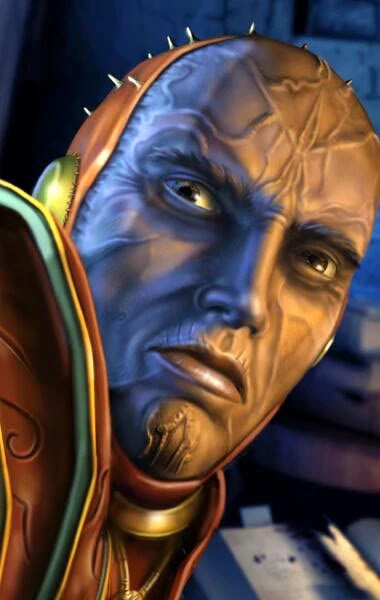
But I’ll forever associate him with the character “Jon Irenicus” of the computer role-playing game, Baldur’s Gate 2: Shadows of Amn.


Anyone who has ever played that game will recall his work for the lead villain. The opening lines will echo in my mind’s ear throughout the rest of my days:

Ahhh, the child of Bhaal has awoken.

It is time for more experiments...

RIP, Shattered One.


21 July 2022

Trailer for Dungeons and Dragons: Honor Among Thieves

Here’s the poster for the forthcoming Dungeons and Dragons movie: Dungeons & Dragons: Honor Among Thieves.
 
 
As you might note, it looks like there’s an owlbear, mimic, brain devourer, displacer beast, and probably a mind flayer (or something with tentacles) in the movie.  
 
 
Some of the monsters mentioned above (owlbear, mimic, and displacer beast) appear in the trailer — plus a gelatinous cube and, of course, some dragons (black and red).
 
It looks rather heavily loaded with CGI. I guess that’s to be expected. The trailer is a bit too “busy” for my tastes. But the tone seems irreverent, which is good. And I quite liked the bit with the lute at the end. It could be a fun fantasy romp. I hope it is! 
 
If you have twenty minutes to kill, here’s a breakdown of the trailer from Chris Perkins and Todd Kenreck, focusing on the monsters and some of the locations for the movie. Unsurprisingly, it is set in the Forgotten Realms (Sword Coast region).

Addition (22 July 2022): Here's a list of the main characters and their D&D classes:
  • Chris Pine is Elgin, a Bard. Elgin notably wears a Harper pin in several scenes in the trailer, hinting that he might be part of the famed organization.
  • Michelle Rodriguez is Holga, a barbarian.
  • Rege-Jean Page is Xenk, a paladin.
  • Justice Smith is Simon, a sorcerer. 
  • Sophia Lillis is Doric, a druid. Doric notably is a tiefling and even has a tail.
  • Hugh Grant is Forge, a rogue. An early report from the movie described him as Forge Fletcher.

(From here.)


20 July 2022

My Top 10 Fantasy and Science-Fiction Films: 2001 A Space Odyssey (#10)

I thought it would be fun to write a brief post on each of my ten favourite science-fiction and fantasy films. All of these films are at least fifteen years old (most much older). I do think that there have been some excellent films released more recently (e.g., Rogue One, last year’s Dune). But if I still really think highly of a film after more than a dozen years or so, then this stability gives me confidence in the soundness of my judgement regarding its quality. Moreover, my sense is that over the past decade or so television has supplanted film in producing high quality, innovate works of fantasy and science fiction (e.g., The Game of Thrones, especially its first four seasons, Watchmen). In any case, since this is a list of my preferences, the fact that I first watched a number of these films during my late childhood and adolescence means that they invariably shaped my later tastes and views. I make no claim of objectivity here (although I do think that, with one noteworthy exception, the films that I will post about are objectively good).


Okay, enough with the preamble. Without further ado, here is my number ten: 2001: A Space Odyssey.


I think most film buffs, and not simply fans of science fiction, would agree that this is a classic, and rightfully so. It’s my second favourite Stanley Kubrick film (after Dr. Strangelove). I love that the aliens are truly alien and incomprehensible (enigmatic black monoliths). And it’s the first major film (that I’m aware of) to portray artificial intelligence (supercomputer HAL) in a plausible and compelling way.


As a youngster I found it a bit slow moving and the ending greatly frustrated me. Nonetheless, I appreciated even then its visual greatness and sweeping ambition. Fortunately, upon seeing it again later as a teenager (and subsequently as an adult), I came to appreciate its pacing and ultimate incomprehensibility.

27 June 2022

Forthcoming Númenor book and some thoughts on the Second Age of Middle-earth


I’ve always found the Second Age of Middle-earth intriguing. One reason is that, unlike the First and Third Ages, it is not a period during which any of Tolkien’s primary stories occur, and hence remains somewhat mysterious. Unlike the First Age, human civilization matures during this time and becomes more than a mere imitation of that of the Elves. Also, unlike the Third Age, it’s not a kind of twilight era of slow decline: human civilization reaches its peak with Númenor, and even after its fall its successor kingdoms Gondor and Arnor successfully secure a future for the most virtuous survivors of the lost island realm. In addition, during the Second Age there remains vital, active, and important Elvish realms (Lindon and Eregion in particular).


The Age’s overarching themes of time and mortality greatly appeal to me as well. The latter theme can be seen most vividly in the rise and corruption of Númenor. The fall of the mighty kingdom, its turning away from the Valar and the Eldar, is primarily because of the Númenoreans’ bitterness with respect to the “curse” of mortality. This theme also appears in the temptation that the nine rings of power have for mortal men. Time afflicts the ageless First Born as well. It is during the Second Age that Elvish efforts are made to render the realms in which they dwell as timeless as themselves – indeed, such power was a primary motivation for the three rings of power forged by Celebrimbor.


Finally, Sauron is a rather intriguing antagonist during most of the Second Age. He’s a fair deceiver – “Annatar,” the Lord of Gifts – capable of fooling both men and (some) elves, rather than simply the hideous powerful creature he becomes following the fall of Númenor.


For these reasons (among others) I’ve long thought that the Second Age would make an excellent role-playing setting. It’s “open” enough to give game masters a lot of room to create new stories and adventures – especially on the main continent, outside of the western Elvish realms – but nonetheless firmly embedded in the amazingly rich history and mythology of Middle-earth.


So, when I first learned that the forthcoming television series (Amazon’s “Rings of Power”) would be set during the Second Age, I was cautiously excited. Alas, my excitement has cooled quite a bit. But it looks like we’ll be getting a new book – The Fall of Númenor – this fall, probably because of the series. (I suspect that the publishers were at least in part motivated to produce and release this book with the event of the Amazon series.)


Here's the blurb (taken from the Tolkien FB page):

We are proud to announce the publication in November 2022 of The Fall of Númenor by J.R.R. Tolkien, edited by writer and Tolkien expert, Brian Sibley, and illustrated by acclaimed artist, Alan Lee. Now available to pre-order: https://smarturl.it/TheFallofNumenor


Presenting for the first time in one volume the events of the Second Age as written by J.R.R. Tolkien and originally and masterfully edited for publication by Christopher Tolkien, this new volume will include pencil drawings and colour paintings by Alan Lee, who also illustrated The Lord of the Rings and The Hobbit and went on to win an Academy Award for his work on The Lord of the Rings film trilogy.


J.R.R. Tolkien famously described the Second Age of Middle-earth as a ‘dark age, and not very much of its history is (or need be) told’. And for many years readers would need to be content with the tantalizing glimpses of it found within the pages of The Lord of the Rings and its appendices.


It was not until Christopher Tolkien presented The Silmarillion for publication in 1977 that a fuller story could be told for, though much of its content concerned the First Age of Middle-earth, there were at its close two key works that revealed the tumultuous events concerning the rise and fall of the island-kingdom of Númenor, the Forging of the Rings of Power, the building of the Barad-dûr and the rise of Sauron, and the Last Alliance of Elves and Men.


Christopher Tolkien provided even greater insight into the Second Age in Unfinished Tales of Númenor and Middle-earth in 1980, and expanded upon this in his magisterial 12-volume History of Middle-earth, in which he presented and discussed a wealth of further tales written by his father, many in draft form.


Now, using ‘The Tale of Years’ in The Lord of the Rings as a starting point, Brian Sibley has assembled from the various published texts in a way that tells for the very first time in one volume the tale of the Second Age of Middle-earth, whose events would ultimately lead to the Third Age, and the War of the Ring, as told in The Lord of the Rings. 

Despite the possibly mercenary motivation for producing this book, it should be a solid scholarly work. It’ll be great to have the history of the Second Age presented in a coherent unified single work. And I’m always happy to see more of Alan Lee’s artwork!

19 June 2022

Foreboding (and Hope?) regarding The Rings of Power series

I haven’t been following the various announcements concerning the forthcoming Rings of Power series lately, given my disappointment with the “time compression” that will be used for the series (that is, compressing about two millennia of events into perhaps a century or even a mere decade).


But I did watch the "Hopes and Fears" video from the “Nerd of the Rings.” I think that I largely agree with the mix of hopes and fears expressed by “the Nerd” (although I’m probably a bit more pessimistic overall). If you’re also a Tolkien fan, and both interested in and concerned about the forthcoming series, I recommend checking out this video.


(By the way, I’ve watched a few other “Nerd of the Rings” videos on various topics concerning Middle-earth. They’re generally of high quality and impeccably researched. I recommend them.)

Blog Archive

About Me

My photo
I'm a Canadian political philosopher who lives primarily in Toronto but teaches in Milwaukee (sometimes in person, sometimes online).